Author: Maria (Boux) Morganti

  • The Manipulative Psychology Behind Christmas in August

    The Manipulative Psychology Behind Christmas in August

    Last week, I went for my weekly grocery shopping at the nearby supermarket. I live in the countryside in south-west Germany, not close to any big cities, but in a fairly large rural area. There isn’t a high density of shops around here – I wouldn’t call it a highly competitive market. I say this because this context is important.

    When I reached the “free time” aisle—the place where you normally find seasonal sweets or “treat” foods—something caught my attention.

    Right next to the barbecue sauces and grilling equipment, there they were: Christmas biscuits and candies. Literally side by side.

    It was August 31st!

    Barbecue products made perfect sense. We’re still hoping to enjoy a few warm days. Maybe we can have some fun “grillen” sessions. This is one of the most beloved summer activities in Germany.

    Nothing, absolutely nothing, made me think of Christmas.

    And yet, there they were: an entire section of the shelf dedicated to Christmas—or, to be politically correct, “Winter Holidays”—products.

    This phenomenon even has a name: Christmas creep, or more generally, holidays creep. Which is the habits from the Retailers to advance selling goods way before their belonging seasons start.

    How did that make me feel?

    First, annoyed.

    That sight instantly reminded me that summer was over, and winter was already looming at the door. I wasn’t ready for that! It even killed my ideas of buying last barbecue items—despite the discounts.

    All of the sudden, I found myself on a cold winter day. There were no warm autumn days in between. What a sad feeling!

    Second, pressured.

    Suddenly, I felt I had to start thinking about Christmas. Normally, I wouldn’t begin before November, maybe two months ahead. But the products on the shelf triggered a mental checklist: decorations, the tree, presents, Plätzchen backen, Christmas dinner… What should I cook for New Year’s Eve?

    Help! A level of anxiety grew in—more unconscious than rational.

    Third, tired.

    That familiar fear of missing out (FOMO) was clearly at play. FOMO is fueled by manipulative retail messages—“only today,” “last items left”—that push impulsive and compulsive buying, especially during flash sales, limited editions, and seasonal promotions.

    Here, the message was subtle: if Christmas sweets are already on sale this early, maybe they won’t be restocked later. Better grab them now. We are constantly bombarded by all kinds of manipulative messages. As consumers, we are not able to make informed decisions anymore. That all create a sense of fatigue and tireless decision making process.

    And I know I’m not the only one.

    This relentless cycle of trend-driven products and seasonal premature sales can not lead to a enjoyable consumer experience.

    I might be wrong. I am sure the marketing retail experts have done their job to prove that this way of pre-selling helps sell more. Otherwise, they would not do it I am sure.

    Still, I can’t help to feel as a consumer this sense on uneasy and dissatisfaction when I was shopping that day, almost a shopping emotional burnout.

    Sciative has done an interesting analysis on “discount fatigue” and its psychology. According to their findings, shoppers today are so bombarded by promotions that they’ve become desensitized. Instead of excitement or urgency, promotions are often met with a shrug, a delayed reaction, or even total disengagement.

    The surprising result of a study conducted by Cornell University is that even if it costs nothing to sell the product early, the company often makes less profit by doing so. If firms allow early buying, consumers may all rush early, or none at all — but rarely split between the two.

    Other research paints a more complex picture. One recent study, for example, found that consumer experiences in retail are closely linked to the neurophysiological immersion of the sales experience, which predicts both purchase likelihood and time spent shopping.

    While that study focused on luxury stores, we could hypothesize that when retailers invest in themed displays and immersive environments—as seasonal creep often does—they can increase dwell time and, consequently, sales. Which could be an explanation on why Retailers do it.

    Consequence of online shopping?

    Seen from another angle, perhaps “Christmas creep” is not simply a cynical retail trick but a logical consequence of how we now shop online.

    E-commerce has trained us to expect immediate availability, early access, and constant variety at our fingertips. Algorithms push “trending” products months ahead of time, and pre-orders have become a norm.

    Supermarkets, in turn, mirror these behaviors in the physical world: by placing Christmas cookies next to barbecue sauce in August, they’re not just rushing the season, they’re responding to a consumer mindset shaped by digital convenience and endless choice.

    I don’t have the answer to this new trend. Nor can I say with certainty whether it’s just something local, a peculiarity of German retail, or part of a broader international shift. What I can observe, though, is that year after year the seasonal calendar seems to creep forward, as if retailers were deliberately pulling us into festivities long before they naturally begin.

    And I personally do not like it. Maybe it’s because my “age” and an old nostalgic habit of celebrate seasonal occasions for a shorter time.

    Or just not that we are already immersed in so many other things. It is easier not having to deal with that one too early on our calendars. As simple as that.


  • The Marketing Pyramid: From Easy & Low-Impact to Tough & Transformative

    The Marketing Pyramid: From Easy & Low-Impact to Tough & Transformative


    In my role leading communications and marketing at a biomedical innovation hub, I often find myself navigating a delicate balance.

    How do we amplify groundbreaking science in ways that are both authentic? How can they also be strategically effective?

    Over the years, I’ve learned that not all marketing methods are created equal. Some are quick wins—low-hanging fruit that are easy to implement and can build initial momentum. But they rarely move the needle in a lasting way. Others demand far more effort, creativity, and trust—but they’re the ones that truly transform visibility into credibility.

    So here’s a quick guide through that pyramid, based on four familiar tools I use often in our strategy: advertising, social media, direct mailing, and the holy grail—referrals.


    1. Advertising – Easy to Start, Easy to Ignore

    Difficulty: ★☆☆☆☆
    Effectiveness: ★★☆☆☆

    Traditional and digital ads (Print, banner ads, Google Ads, etc.) are among the most accessible marketing tactics. You can set up a campaign in a matter of hours and start reaching thousands of eyes instantly.

    Pros:

    • Scalable reach
    • Quick to launch
    • Easy A/B testing

    Cons:

    • Low trust factor
    • Often ignored or blocked
    • Expensive over time

    Best Use: Awareness-stage campaigns, re-targeting, time-limited promotions.


    2. Social Media – Engaging but Saturated

    Difficulty: ★★☆☆☆
    Effectiveness: ★★☆☆☆ to ★★★☆☆

    Social media marketing seems easy—just post and go, right? But in reality, cutting through the noise requires consistency, creativity, and a deep understanding of audience behavior.

    Pros:

    • Interactive and visual
    • Great for building brand personality
    • Direct customer feedback

    Cons:

    • Constant content demand
    • Algorithmic gatekeeping
    • Declining organic reach

    Best Use: Community engagement, brand storytelling, thought leadership.


    3. Direct Mailing – Personalized but Underused

    Difficulty: ★★★☆☆
    Effectiveness: ★★★★☆

    In a world overloaded with emails and notifications, a well-crafted direct mail can be a breath of fresh air. Whether physical or digital, it offers a personalized touch that feels intentional.

    Pros:

    • High targeting precision
    • Less competition in physical inboxes
    • Tangible and memorable

    Cons:

    • Time-consuming to execute
    • Higher cost per contact
    • ROI requires nurturing

    Best Use: Account-based marketing, event invitations, exclusive offers.


    4. Referrals – Hard to Earn, Impossible to Fake

    Difficulty: ★★★★★
    Effectiveness: ★★★★★

    Word-of-mouth and referrals sit at the pinnacle of the marketing pyramid. They’re difficult to orchestrate directly, but they carry unmatched influence and trust. In many sectors—especially healthcare, B2B services, and high-ticket items—they’re the gold standard.

    Pros:

    • Extremely high trust and conversion rates
    • Low customer acquisition cost (once systematized)
    • Great for network expansion

    Cons:

    • Takes time and consistent value delivery
    • Requires a delighted customer base
    • Not easily scalable

    Best Use: Relationship-driven sales, community growth, loyalty programs.


    Climbing the Pyramid: Strategy, Not Substitution

    While it’s tempting to stick with easy, scalable tactics, true marketing impact comes from layering your efforts. Use advertising and social media to build visibility, direct mailing to personalize the journey, and referrals to seal the deal.

    The real magic? When all these elements work together—strategically aligned, audience-aware, and value-driven. That’s when marketing transforms from noise into influence.

  • Redefining Tech with Ethics: “Whoever writes the code dictates the rules.”

    Redefining Tech with Ethics: “Whoever writes the code dictates the rules.”

    At the inaugural FPS2025 summit, one of the most captivating conversations centered on the intersection of artificial intelligence (AI), privacy, and the ethical implications of technology.

    Meredith Whittaker, President of Signal and a vocal advocate for tech accountability, engaged in a thought-provoking discussion with Matteo Flora, the most expert on AI and digital reputation in Italy and probably one of the most prominent at global level. Their conversation, which took place in L’Aquila, Italy, highlighted critical issues in the tech industry today — from the dangers of surveillance capitalism to the ethical dilemmas of AI deployment

    I decided to dedicate this post to this interview, that I found incredibly important and yet not seen / heard enough.

    The Code Dictates the Rules: Who’s Behind AI?

    A central theme of the conversation was the idea that “whoever writes the code dictates the rules.” Whittaker emphasized the profound implications this has for our society.

    With the rise of AI, we are seeing unprecedented scales of power being concentrated in the hands of a few tech giants who not only control vast amounts of data but also influence societal norms and political landscapes.

    AI, she explained, is not magic but simply sophisticated code executed on powerful hardware platforms. However, these systems are often built on biased data, reflecting the interests of a small group of corporations with a profit-driven agenda. Whittaker raised concerns about the monopolization of AI development, highlighting how only a handful of companies own the infrastructure and the data that train these systems. This creates a dangerous asymmetry in power, as these companies dictate the narrative surrounding AI, often casting it as a superhuman force that society should revere.

    The Ethics of AI and Data Collection

    One of the most pressing issues discussed was surveillance capitalism—the business model that underpins much of the tech industry. Whittaker contrasted this model with the mission of Signal, which is to provide a secure, private communication platform that respects user privacy. She pointed out that the current tech landscape, where personal data is collected and monetized, is not designed with the user’s best interest in mind.

    Signal, as a nonprofit organization, faces the challenge of maintaining its privacy-first model in an industry that thrives on data exploitation. Running such a platform at scale costs millions of dollars annually, and Whittaker explained that if Signal were a for-profit company, it would inevitably face pressure from investors to compromise its privacy standards for the sake of profit. This is why Signal must remain independent of the profit-driven business models that dominate the tech industry.

    The Global Impact of Privacy

    Throughout the conversation, the global implications of tech and privacy were a recurring theme. Whittaker discussed the importance of cross-border communication and how platforms like Signal empower people worldwide to connect securely. Unlike nationalized versions of tech products, which would be restricted by jurisdictional boundaries, Signal’s universal design ensures that it works seamlessly for people across different countries and cultures.

    In addition to tech’s global reach, Whittaker also emphasized how AI can contribute to the homogenization of culture, creating a risk of losing linguistic diversity and cultural richness. She cautioned against the dangers of AI reflecting only the narrow perspectives of a few dominant cultures, particularly those in Silicon Valley, and warned that this could stifle creativity and unique ways of thinking.

    Basically the message is: “Most – all – digital large global platforms are designed to collect user data, making it nearly impossible to build similarly large, stable, and user-friendly platforms without relying on data-driven ROI. The very basic infrastructure is nearly impossible to build without huge investment”

    Building a Better Future with Tech

    Despite the challenges and ethical quandaries, Whittaker remains optimistic about the potential for change. She advocates for innovating the business models behind tech, suggesting that true innovation lies not just in new technologies but in rethinking how these technologies are funded and distributed. She sees a future where privacy and fairness are not afterthoughts but foundational principles.

    The conversation at FPS2025 ended with a call for a societal shift. Whittaker urged policymakers to adopt regulations that challenge the current business models and protect individual rights in the face of rapidly advancing technology.

    She also urged the European Parliament to embrace a more equitable tech ecosystem, one that does not succumb to the dominant narratives set by large corporations but instead fosters a digital environment that works for everyone.
    Especially now that the UE signed a letter with 44 European CEOs asking the EU to pause the AI Act for two years, it is the time to rethink the legislation and make it suitable for innovating while ensuring parity and equal rights.

    The Bottom Line: Tech for Good

    Whittaker’s reflections underscore the importance of ethical tech in the modern world. As AI continues to reshape our societies, the conversation about who controls the code and how that power is used has never been more crucial.

    Through platforms like Signal, Whittaker and her team are pushing back against the status quo, demonstrating that it is possible to build technology that prioritizes privacy and fairness over profit. The challenge, however, remains: will we as a society allow this vision to flourish, or will we continue to let surveillance capitalism dictate the rules?

    In the end, Whittaker’s message is clear: the future of tech must be inclusive, transparent, and accountable. It’s up to us — the users, the builders, and the policymakers — to decide how we want that future to look.

  • TikTok and the Dopamine Connection: Why It’s So Addictive

    TikTok and the Dopamine Connection: Why It’s So Addictive

    In just a few years, TikTok has become a cultural phenomenon, captivating millions of users worldwide with its short, engaging videos and hyper-personalized content. Whether you’re watching funny skits, dance challenges, or life hacks, the platform keeps you hooked with its seemingly endless stream of entertainment.

    Some numbers around TikTok

    TikTok has experienced remarkable growth and engagement since its launch. Here are some key numbers – Source: How many users on TikTok? Statistics & Facts (2025)

    • Content categories: The most popular categories on TikTok are Entertainment, Dance, and Pranks, with billions of views each
    • Monthly active users: TikTok has over 1 billion monthly active users globally, with 150 million in the United States (growth of over 10 times in last 5 years).
    • User demographics: About 44% of TikTok users are under 25 years old.
    • Time spent: The average daily time spent on TikTok has more than doubled from 27 minutes in 2019 to 58 minutes in 2024.
    • Engagement rate: TikTok has an average engagement rate of 5.96%, making it the most engaging social media platform.
    • Regional growth: By 2023, TikTok is projected to have 682 million users in the Asia Pacific region (excluding China and India), 238 million in Europe, and 192 million in North America.

    But what makes TikTok so hard to put down?

    The secret lies in its algorithm, which curates content tailored to your interests, and its ability to trigger the brain’s reward system through bursts of dopamine—the “feel-good” chemical that reinforces pleasurable activities. This clever combination of psychology and technology creates a feedback loop that keeps users scrolling for hours.

    Dopamine is at the heart of TikTok’s addictive design.

    The app capitalizes on variable rewards—those unpredictable moments when you find an exceptionally engaging video—similar to pulling the lever on a slot machine. Each time you laugh at a funny clip, discover something new, or feel validated by likes and comments, your brain releases dopamine, reinforcing the desire to keep scrolling.

    TikTok’s endless feed and short-form content further amplify this effect, delivering quick hits of entertainment without requiring much effort. The result?

    A platform that not only entertains but also conditions the brain to crave more, making it one of the most compelling social media experiences today.

    A 2022 study from the Frontiers in Psychology journal found that TikTok is the most highly addictive of all social media platforms. TikTok manipulates dopamine levels through several key mechanisms designed to create an addictive user experience.

    TikTok’s AI-driven algorithm

    TikTok’s AI-driven algorithm is a sophisticated system designed to create a highly personalized and engaging user experience.

    TikTok’s AI-driven algorithm is a highly sophisticated system that tailors content to individual users, creating an addictive and personalized experience. By analyzing user interactions—such as likes, shares, watch time, and even pauses—the algorithm learns preferences and predicts what content will keep users engaged.

    It uses machine learning to identify patterns in behavior and pairs this with metadata from videos, including hashtags, captions, and trending sounds, to deliver a feed uniquely curated for each user.

    This real-time adaptability ensures that TikTok’s content always feels fresh and relevant, driving high levels of user engagement and fostering an unparalleled connection between the platform and its audience.

    Why It Can Be Addictive

    1. Short-form content: TikTok’s 15-60 second videos provide rapid-fire bursts of entertainment, each potentially triggering a small dopamine release[1]. This creates a short-term dopamine feedback loop, reinforcing the behavior of continued scrolling. According to a 2020 study from the University of California – San Diego, TikTok users in the United States open the app an average of eight times per day and spend an average of 46 minutes on the app.

    2. Infinite scroll: The endless stream of content removes natural breaking points, keeping the dopamine system constantly engaged and making it difficult for users to stop scrolling. According to the researchers of another study “the system quality has a stronger influence than information quality in determining adolescents’ experience with TikTok and that the flow experience has significant direct and indirect effects on TikTok addiction behavior” – meaning the way the algorithm chose the content to visualize and for how long influence more the experience than the content itself.
    3. Personalized “For You” page: TikTok’s AI-driven algorithm presents highly tailored content, creating a consistently rewarding experience that triggers more frequent dopamine releases. The average daily usage of TikTok is 95 minutes (compared to 17 minutes for YouTube and 29 minutes for Instagram), made possible through continuously analyzing user behavior and content characteristics, TikTok’s AI algorithm creates an addictive and personalized experience that keeps users engaged for extended periods.
    4. Variable reward pattern: The algorithm regularly incorporates new content types to discover new facets of user interests. The unpredictable nature of content quality in the feed triggers dopamine release, similar to the mechanism behind slot machines. Besides dopamine, TikTok also triggers the release of epinephrine, norepinephrine, and oxytocin, creating a complex neurochemical response that enhances the addictive potential.
    5. Real-time adaptation: The algorithm quickly adjusts to changes in user preferences and behavior. Using a new sophisticated “collisionless embedding” system, it organizes not only content but also user data efficiently (by categories) enabling better and faster recommendations. The “Monolith” system (this is how it’s called) updates its model continuously, learning from user interactions and syncing the data at short intervals.
    6. Content relevance over creator popularity: Even new creators can gain visibility if their content resonates with users. It mixes constantly contents from new creators with established ones, to enhance the possibilities to become viral for anyone, also without high number of contents.

    This combination of features creates a powerful cycle of anticipation and reward, keeping users engaged and continuously seeking the next dopamine hit. The result is a “dopamine machine” that can lead to addiction-like behaviors and potentially negative long-term consequences for users’ mental health and cognitive function.

    US is concerned: TikTok faces a U.S. Ban

    The potential TikTok ban in the United States stems from national security concerns over its parent company, ByteDance, and its ties to China. Lawmakers worry that Chinese government laws could compel ByteDance to share sensitive user data or leverage TikTok’s content algorithms to spread misinformation. As a result, legislation has been passed requiring ByteDance to sell TikTok to a U.S.-approved buyer or face a nationwide ban. Despite TikTok’s denial of these allegations and efforts to distance itself from ByteDance, the pressure on the platform remains high.

  • Ai, LinkedIn and digital visibility for the Pharma Industry

    Ai, LinkedIn and digital visibility for the Pharma Industry

    LinkedIn Strategy for Improving Visibility in the Pharma Space

    In today’s rapidly evolving pharmaceutical landscape, effective communication with consumers has never been more critical. As the industry shifts towards more transparent and direct engagement, it is essential for pharmaceutical companies to master the art of communicating with their audience.

    This is where a diverse range of stakeholders—including

    • ingredient companies,
    • regulatory bodies,
    • healthcare professionals,
    • Biotechnology innovators / knowledge center
    • health marketing agencie

    can play pivotal roles. By providing support and guidance on best practices for consumer communication, these stakeholders can empower pharmaceutical firms to navigate the complexities of direct engagement.

    Social media platforms have revolutionized how information is shared and consumed, enabling pharmaceutical companies to connect with their audience in real-time. This direct communication not only enhances brand visibility but also fosters trust and loyalty among consumers.

    By fostering this collaboration, ingredient and other partners companies can help pharmaceutical firms harness the power of social media, ensuring they not only reach their target audience but also engage them meaningfully. Together, we can enhance the overall healthcare dialogue, making it more accessible and consumer-friendly.

    According to a study published in June this year, pharmaceutical firms can enhance their sales and marketing strategies to drive revenue growth by leveraging social media platforms like Facebook, Twitter, and YouTube. These platforms enable targeted marketing efforts, allowing companies to identify and engage with potential consumer categories, from healthcare professionals to end users.

    Not just “fun” platforms, social media channels have become a needed tool also for the Pharmaceutical industry. Always according to the study: “Revenue growth and improved sales productivity are possible outcomes of this (social media marketing)”.

    Key Benefits:

    1. Increased Audience Reach: With billions of active users, social media offer pharmaceutical companies the opportunity to connect with a diverse audience, enhancing customer interaction and engagement.
    2. Competitive Analysis: Facebook’ and other plattforms’s Insights tool provides valuable analytics, enabling companies to track engagement metrics, ad performance, and audience demographics. This data helps refine marketing strategies and better understand audience preferences.
    3. Automation and AI Integration: The use of artificial intelligence (AI) in pharmaceutical marketing allows companies to analyze vast amounts of data, predict customer behavior, and create personalized experiences. AI tools are essential for developing precise and effective marketing campaigns.


    Overall, utilizing these digital technologies can lead to improved sales productivity and significant revenue growth for pharmaceutical companies.

    This is an effort that pharmaceutical companies can not make on their own. The whole chain involved in devolopping procees should work combined to support what is finally the expectations of the consumers: more clear and transparent communication.

    Today I’d like to start by focusing on the most B2B platform: LinkedIn.

    Despite very professional oriented, it has become highly used in many other aspects and more and more people share their personal stories and uses as frequently as facebook or other more “personal” channels. This is why ignoring it or worse, treating it like a pure “presence” plattform might be a big mistake.

    Especially company image and reputation within a complex and highly competitive like the pharmaceutical industry should be prioritized. The engagement and interactions will lead to visibility that will make the company the “authority” in the space.

    This is why it’s important to have a well-rounded strategy that leverages LinkedIn’s networking, content, and engagement tools. Here’s a step-by-step approach that can help build your presence and establish your authority within the pharma space.


    1. Optimize Company LinkedIn Profile

    • Company Headline: Clearly communicate the mission and expertise in the pharma industry. Include relevant keywords like “Pharmaceutical Expert,” “Biotech Industry Leader,” or “Clinical Research Specialist.”
    • Logo and Banner: Use a high-quality, professional photo of the company and the team. For the banner image, use something industry-related, like a lab or an abstract medical theme. The “diversity” aspect should be highlighted.
    • About Section: Tell company story and mission. Highlight employees experience and activities, areas of expertise (e.g., drug development, regulatory affairs, market access), and main events. This is an opportunity to enhance the people and their successes.
    • Showcase Section: Showcase key achievements, publications, or projects relevant to the pharmaceutical industry


    2. Define Company Spokesperson

    • Role of the Spokesperson: Select a knowledgeable executive or senior professional (e.g., CEO, Chief Medical Officer, Head of R&D) to serve as the company spokesperson on LinkedIn.
    • Profile Setup: Ensure the spokesperson has a well-optimized LinkedIn profile that complements the company’s brand and mission. Include a professional photo, detailed experience, and a compelling headline.
    • Create a Communication Plan: This person should actively engage with followers, share insights, and represent the company’s voice in discussions. Decide a set of topics each month and include sporadically new contents based on latest news from the industry. Prepare an Editorial Plan to follow through, which links company corporate communication to Speakspeople communication.


    3. Content Strategy: Thought Leadership and Engagement

    • Original Articles: Have the spokesperson write and share articles on relevant topics such as drug development, regulatory updates, patient advocacy, and industry trends. This establishes authority and showcases expertise.
    • Regular Posts: Share company updates, product launches, research findings, and industry news at least 3-4 times a week. Encourage the spokesperson to share their insights on these posts to add a personal touch.
    • Engaging Multimedia: Utilize videos, infographics, and webinars featuring the spokesperson discussing important topics or insights in the pharma space. This helps humanize the brand and engage audiences visually.


    4. Networking and Engagement

    • Connect with Industry Leaders: The spokesperson should actively connect with key opinion leaders, healthcare professionals, and relevant organizations in the pharmaceutical industry. Personalized connection requests will enhance networking opportunities.
    • Join Relevant Groups: Participate in industry-specific groups to share insights, answer questions, and engage in discussions. This builds credibility and expands the company’s reach within the community.
    • Comment and Engage: The spokesperson should regularly comment on posts from industry peers and thought leaders to increase visibility and foster relationships.


    5. Utilize LinkedIn Analytics

    • Monitor Engagement: Regularly analyze LinkedIn metrics to assess the performance of posts and articles. Identify what content resonates most with the audience and refine strategies accordingly.
    • Audience Insights: Use demographic data to better understand who is engaging with the company’s content and tailor messaging to suit the interests of these audiences.


    6. Leverage Paid Advertising

    • Sponsored Content: Consider using LinkedIn Sponsored Content to promote high-value posts, such as whitepapers or webinars, to a targeted audience within the pharmaceutical sector. But do this only when there is a clear and well defined target group and limit the time of the ad. It can goes up very quicly.
    • Precise Targeting: Utilize LinkedIn’s targeting options to reach healthcare professionals, researchers, and decision-makers in the pharmaceutical industry.


    7. Engage with Industry Events

    • Post Event Summaries: After attending industry conferences or webinars, the spokesperson can share key takeaways and insights, positioning the company as an active participant in the industry.
    • Host Webinars: Organize webinars on relevant topics featuring the spokesperson as a key presenter. Promote these events on LinkedIn to attract attendees and foster engagement.


    8. Encourage Employee Advocacy

    • Engage Employees: Encourage employees to share company content and their insights on LinkedIn, amplifying the reach of posts and building a community around the brand.
    • Recognition and Sharing: Recognize employees who actively participate in sharing content or engaging with the audience, fostering a culture of advocacy.


    By combining a well-optimized profile with regular, insightful content, strategic networking, and a focus on industry trends, the company profile will see a steadily increase in visibility in the pharma space on LinkedIn. Tailoring the strategy to highlight thought leadership and active engagement will help establish you as an authoritative voice in the industry.

  • Rethinking AI in Advertising: The Missed Opportunity in the Gemini Olympics Ad

    The recent Gemini ad that aired during the Paris Olympics has sparked significant discussion, and I find myself agreeing with some of the criticisms it has received. The ad, which portrays AI assisting a father in writing a letter for his daughter, left many with the impression that AI was replacing the father’s role in an intimate and personal task.

    In a recent interview with The Wall Street Journal, Google’s Android chief Rick Osterloh defended the company’s decision, stating, “Clearly the market isn’t fully ready to embrace all the changes that come with AI.” I believe this is a very unfortunate way to respond to the criticism.

    Shifting the responsibility to the audience, implying they are “not ready” or didn’t understand the message, misses the point entirely and is never a good idea. It’s not about the market being ready—it’s about understanding the deeply personal nature of the relationship the ad depicted and how AI was framed in that context.

    Instead of taking responsibility for the misstep, this response seems to place the blame on the audience, which only further alienates those who felt uncomfortable with the ad’s message.

    Rick further insisted that AI technology is now so powerful that it would allow Sydney McLaughlin’s daughter to write several appreciation emails or even produce different kinds of content, like an essay or a poem. But again, this misses the essence of the ad’s intended message. The purpose of this communication campaign was to enhance the emotional bond between father and daughter in the context of sports, ideally with the thoughtful integration of AI – not to promote the “text writing” capability of Gemini, as though it were the only “understandable” and easy-to-grasp feature for the audience.

    Moreover, it’s important to consider the broader implications of the ad’s portrayal. The fact that only Black people are represented in the ad could be misinterpreted as suggesting that they are “not educated” and need help with writing because they are not capable themselves. This kind of messaging is not only misguided but potentially harmful.

    Instead of focusing on AI’s ability to write text, the campaign could have shown how AI can genuinely support and strengthen relationships, particularly in the context of a father-daughter bond in sports. For instance:

    • Performance Analytics: AI could have been depicted helping Sydney McLaughlin analyze her race performance, offering insights to refine her technique and improve her times.
    • Personalized Training Plans: The ad could have shown AI assisting her coach in creating a personalized training regimen tailored to her unique strengths, weaknesses, and goals.
    • Mental Preparation: AI could also play a role in mental conditioning, offering meditative guides or visualization exercises to help Sydney maintain her focus under pressure.
    • Injury Prevention and Recovery: An AI could have been portrayed helping her monitor her health and recovery, ensuring she stays in peak condition throughout her training.

    These examples would have demonstrated AI’s capability to augment human connections and enrich shared experiences, rather than replacing personal moments or perpetuating stereotypes.

    As we continue to explore the boundaries of AI, it’s crucial to strike the right balance and ensure that we’re enhancing human connections, not diminishing them. And when feedback comes, let’s be open to it—acknowledging the need for better messaging and deeper understanding, rather than attributing it to a market not being ready.

  • Understanding Consumer Perception of Sustainable Ingredients – Part 3

    Understanding Consumer Perception of Sustainable Ingredients – Part 3

    Understanding the psychological factors that drive consumers to choose sustainable food products can help businesses tailor their marketing strategies and product offerings.

    The results from Nielsen Company “2014 Report – Millennial Breaking The Myths” with 30,000 participants in 60 economies suggests that millennials are willing to spend extra for the products and services offered by firms committed to sustainability issues.

    Another study published in 2016 in the Journal of Business & Society titled “Corporate Social Responsibility and Consumer Behavior: A Meta-Analytic Review” conducted a metaanalysis of over 300 studies and found that consumers are more likely to purchase products from companies that are perceived to be socially responsible, which includes efforts towards sustainability, including ingredient sourcing practices.

    Which psychological factors trigger consumer choices?

    Knowing the psychosocial factors that may predict a food choice product may be useful to understand what drives consumers to choose this category of food.

    Buying behavior theories

    Between 50% and 99% of brain processing is occurring without our awareness. There’s a whole lot going on in our brain that we just aren’t aware of and don’t have access to.
    There’re a lot of theories and evolutionary reasons for that. We can’t possibly think about every single decision we make. It would be exhausting, and we’d be paralyzed. Our memories and our conscious awareness of our behaviors are very limited.


    This unawareness should be considered when analyzing the results of our research and
    include psychological, social, and economic factors that might influence consumer behavior towards the decision of buying or not.

    Social Cognitive Theory:

    • Consumers’ perception of control over their purchasing decisions plays a significant role in how they respond to sustainability claims. Empowering consumers through interactive marketing platforms can enhance this sense of control.
    • References: Qian Wang, Junsheng Dou (2016).

    Emotional Appeal:

    • Emotions such as hope and pride can drive sustainable consumption. Positive reinforcement and public recognition of sustainable choices can motivate consumers to act in environmentally responsible ways.
    • References: Katherine White (2019).

    Theory of Planned Behavior:

    • The integrated model of planned behavior and value-belief-norm explains how psychological determinants influence consumers’ intention to purchase natural and sustainable food products.
    • References: Carfora et al. (2021).

      Conclusion By understanding and leveraging the psychological factors that influence sustainable food choices, businesses can more effectively communicate their sustainability efforts and drive consumer behavior.

    1. Understanding Consumer Perception of Sustainable Ingredients – Part 2

      Understanding Consumer Perception of Sustainable Ingredients – Part 2

      Today I want to introduce the concept of Green Marketing.

      What does Green Marketing mean? Green marketing, also known as sustainable marketing or eco-marketing, refers to the practice of promoting products or services based on their environmental benefits.

      Disclaimer: Despite the increasing adoption of green marketing strategies by organizations, there is a gap in the literature when it comes to examining consumer perceptions of the alignment between these strategies and their beliefs. Scholars studying sustainable consumption assume that sustainability is positive

      Green marketing has become a crucial strategy for businesses aiming to appeal to environmentally conscious consumers. This post explores the effectiveness of green marketing and its impact on consumer behavior.

      I found one study from 2011 investigated how two sustainability dimensions (i.e., environmental and economic) and price can influence consumer responses and was found an interaction effect between consumer support for sustainability and corporate sustainability; consumers evaluate a company more favorably if the company shares the consumers’ social causes. “Overall, we conclude, from our empirical study, support for the idea that consumers do respond to multiple dimensions of Sustainability” (Sungchul Choi • Alex Ng 2011).

      In 2009, Grail Research performed a survey of 800 green consumers in the United States
      and found a correlation with pricing of products. Consumers who have never purchased
      green products are stopped from doing so because they are thought to be too pricey,
      according to this study. “The biggest reason why people do not buy green products is
      because they are too expensive”

      Here are some key aspects of green marketing related to the consumer perceptions:

      1. Evolution of Green Marketing:
        • Green marketing strategies have evolved over the past two decades, focusing on educating consumers about environmental issues and promoting sustainable practices.
        • References: Lakshmi Viswanathan, George Varghese (2018).
      2. Consumer Response to Green Marketing:
        • Studies show that consumers respond positively to green marketing when it aligns with their values and provides clear, actionable information. However, overabundance of eco-labels can sometimes confuse consumers.
        • References: Pancer et al. (2017), UNOPS (2009).
      3. Case Studies and Success Stories:
        • Successful green marketing campaigns often involve transparent communication and verifiable claims, helping consumers make informed choices and fostering brand loyalty.
        • References: European Commission (2022), Nielsen (2023).

      Conclusion Effective green marketing requires a balance between educating consumers and providing clear, trustworthy information that aligns with their values and environmental concerns.

    2. Understanding Consumer Perception of Sustainable Ingredients – Part 1

      Understanding Consumer Perception of Sustainable Ingredients – Part 1

      Consumers are increasingly concerned about the sustainability of the products they purchase, especially in the food industry. This growing awareness has significant implications for businesses looking to align with consumer values and meet market demands.

      In these blog posts serie I delved into the consumer perceptions of ingredients products in the food industry and how do efforts towards sustainability are perceived by end consumers and how does this impact their purchasing decisions.

      Some of findings were quite new to me while other are more a confirmation of what’s known. This is why I decided to dedicate a series of blog post to this as might be useful for professional in the food Industry market.

      Consumers expectations

      In today’s evolving marketing landscape, it has become crucial for food producers to differentiate themselves in the marketplace by offering unique products. In the past, simply producing a high-quality product was enough.

      However, consumers now demand products that not only meet their needs but also align with their social or environmental values. As a result, companies need to consider the social and environmental appeal of their products in order to stay competitive and meet the changing preferences of consumers

      Eco-labels

      Currently, there are more than 450 different eco-labels available, and more being developed as we speak. Meanwhile consumers are becoming more environmentally conscious and socially responsible, and they are increasingly seeking products that align with their values, including sustainability.


      Meanwhile consumers in industrialized countries are nowadays much more interested in information about the production methods and components of the food products that they eat, than they had been 50 years ago.

      What are consumers they looking for?

      1. Consumer Awareness and Preferences:
        • The research highlights that consumers are more aware of the environmental impact of their food choices than ever before. They seek transparency and accurate information on ingredient labels to make informed decisions.
        • References: Ajay Menon & Anil Menon (1997), Lakshmi Viswanathan, George Varghese (2018).
      2. Impact on Purchasing Decisions:
        • Consumers’ purchasing decisions are influenced by the presence of sustainability claims on food products. Clear and trustworthy labels can enhance consumer trust and drive purchasing behavior.
        • References: Sherry Frey of NielsenIQ and Jordan Bar Am, Vinit Doshi, Anandi Malik, and Steve Noble (2023).
      3. Challenges and Opportunities:
        • Despite positive attitudes towards sustainable products, there is often a gap between intention and actual purchasing behavior. This discrepancy presents both a challenge and an opportunity for marketers to bridge through effective communication.
        • References: Katherine White (2019), Sergio Silva Braga Junior et al. (2014).

      Businesses that prioritize and communicate their sustainability efforts are more likely to attract environmentally and socially conscious consumers, leading to increased sales and brand loyalty.

    3. Green Hushing and avoiding communication about environmental initiatives and sustainability

      Green Hushing and avoiding communication about environmental initiatives and sustainability


      The Reputation Institute says 91% of consumers want to engage with brands with strong CSR. This need of transparency reflects a broader trend toward corporate accountability and sustainability, driven by heightened expectations from stakeholders, investors and consumers to regulators and civil society.

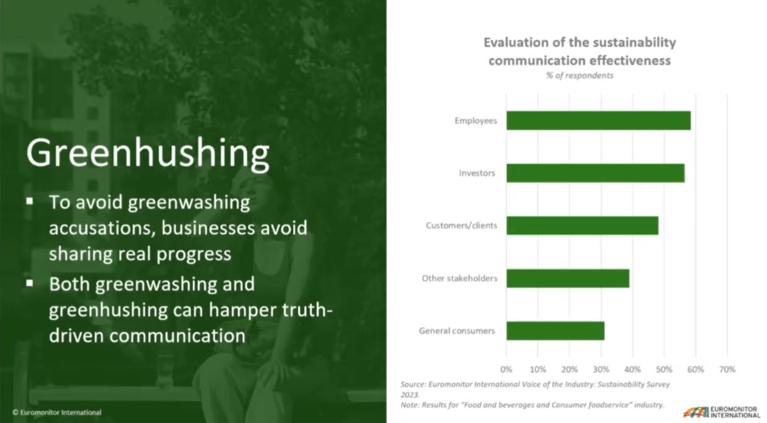
      Transparency, as manifested through comprehensive ESG disclosure, is seen as a mechanism for fostering trust, enhancing stakeholder engagement, and promoting responsible business practices. Yet, many companies are taking a step back and started practicing what is called “Green Hushing”.

      The term green hushing was coined in late 2022 by Zurich-based consultancy South Pole, after a study the same year surveyed 1,200 private companies in 12 countries and 15 sectors on their net-zero progress. It found that 72 percent of the companies surveyed had set emissions targets in line with global climate goals. However, the study also found that one in four companies do not plan to talk publicly about their climate-related goals.

      This can be explained for several reasons:

      1. Fear of Scrutiny: Companies may be concerned that their environmental claims could be scrutinized or criticized, especially if they are not fully meeting sustainability goals or if there are discrepancies in their practices.
      2. Avoiding Greenwashing Accusations: To steer clear of being accused of Green washing (making misleading claims about the environmental benefits of a product, service, or company), some organizations choose not to publicly share their sustainability efforts.
      3. Competitive Advantage: Some companies might view their sustainability strategies as a competitive advantage and choose to keep them confidential to prevent competitors from copying their practices.
      4. Uncertainty in Regulations: With evolving regulations and standards around environmental claims and sustainability reporting, companies might hesitate to communicate their efforts until there is more clarity.
      5. Incomplete Initiatives: Companies might prefer to remain silent about their environmental efforts until they have fully developed and implemented their initiatives to avoid premature disclosure and potential backlash if the efforts fall short.

      By engaging in green hushing, companies aim to mitigate risks associated with public and regulatory scrutiny while still working towards their sustainability goals internally.

      This is in my opinion very short-sighted from company’s perspective. In today’s dynamic business landscape, where consumers are more and more informed and therefore interested on how companies behave (especially in topics related to social responsibility), companies are expected to share more information.

      This is not something companies can escape nor avoid.

      Firstly for most large companies based in the EU or generating over EUR 150 million in EU the Corporate Sustainability Reporting Directive (CSRD) will be a mandatory open report from 2025.

      Furthermore According to a study from 2022, among consumers, increasing visibility and the disclosure of information has always positive effects in the strengthening of trust among consumers. No matter is at that certain point collected data are not as positive as you might wish for, alone the facts that they have been showing and made available is a sign of responsibility and accountability.

      Being trust is nowadays becoming more important than money.

      But how does it have to do with digitalization? Only through digital tools and platform the process of gathering data and communicating will be enabled. Some examples:

      Automation of Data Gathering: Digital tools can automate the collection of sustainability data, reducing human error and increasing efficiency. For instance, IoT devices can monitor energy usage, emissions, and resource consumption in real-time.

      Centralized Data Repositories: Digital platforms can centralize sustainability data, making it easier to manage, analyze, and report.

      Real-Time Reporting: Digitalization allows for real-time data collection and reporting, which can improve the accuracy and timeliness of sustainability reports.

      Standardization: Digital tools can help standardize data formats and reporting structures, aligning with CSRD requirements and making comparisons across companies more straightforward

      Interactive Platforms: Digital platforms can facilitate better communication with stakeholders by providing interactive and easily accessible sustainability reports.

      About 66% of consumers want to know about the brands they engage with, and nearly 60% want to hear about it on social media. Rather, respondents believe brands are more effective on social media when they announce donations to specific causes (39%) and encourage followers to take specific steps to support causes (37%), such as participating in events or making their own donations.

      Feedback Mechanisms: Digital tools can include mechanisms for stakeholder feedback, enhancing engagement and accountability.


      So my takeaways: Digitalization is not a “nice-to-have” project in organisations, rather the very starting point to be able to comply with CSRD as well as having sustainability data more accurate, accessible, and actionable. Ultimately by leveraging digital tools and technologies, companies can achieve greater transparency, efficiency, and stakeholder engagement hence create and enhance trust.