

“Consumer Perceptions and Acceptance of Alternative Proteins through Strategic Communication: a Framework for the Future“
February 2025
The global food industry is undergoing a transformative shift as alternative proteins emerge as sustainable and ethical alternatives to traditional animal-based products. In the context of new food, I decided to explore the consumer perceptions and acceptance of alternative proteins (focusing on precision fermentation and cell-based proteins), emphasizing the impact of communication strategies.
This study employs a mixed-methods approach, integrating quantitative surveys and qualitative interviews to gather comprehensive data on consumer attitudes, motivations, and barriers related to alternative protein consumption. My goal was to provide a Communication Framework suitable for the food industry approaching the launch of new food products based on these new proteins.
A unique aspect of this study is its experimental design, testing the impact of different communication channels on participants’ willingness to adopt alternative proteins and pay a premium for them. Each communication piece focuses on one key topic:
- Production processes
- Sustainability
- Animal welfare
I wanted to see if a communication piece would change the perception of a new food item. I was especially interested in whether willingness would increase based on the content and method of communication.
Literature & Narrative
Consumer acceptance of alternative proteins is growing, leading the food industry to invest in research, expand product variety, and refine strategic communication efforts. Regulatory frameworks and sustainability initiatives play a crucial role in shaping the future of alternative proteins, ensuring they meet both consumer demands and global sustainability goals.
The literature explored provided insights into “synthetic” protein narratives and consumer perceptions. However, no significant evidence was found on how communication impacts acceptance. Understanding how communication influences acceptance is essential, forming the foundation of this research.
The various psychological, social, and cultural factors that influence food choices, as explored through models like the Theory of Planned Behavior (Ajzen 1991), Health Belief Model (I M Rosenstock 1988), Social Cognitive Theory (A. Bandura 2004), and Consumer Culture Theory (Thompson 2005), reveal that consumer acceptance of food goes far beyond simple product attributes like taste or price.

This graphical Abstract from “Evidence Supporting Consumer Motivations for Alternative Proteins (Tso, Lim und Forde 2021, Graphical Abstract of the Article)” shows the main motivations that should be addressed for effective communication strategies in shaping consumer attitudes toward alternative proteins. To succeed in promoting alternative proteins, companies must prioritize clear, fact-based messaging about safety, health, and sustainability, leveraging both trusted media and experiential marketing to win over skeptical consumers.
Numerous factors (as shown below) from various nature play significant roles in shaping consumer preferences.

Sources of Information for consumers
Product Packaging:
- Ingredients List: Approximately 62% of consumers consult the ingredients list on product packaging when shopping.
- Front-of-Package Information: About 52% look for information on the front of the package, which often highlights key ingredients or health claims.
Online Resources:
- Brand Websites and social media: Roughly 20% of consumers check the official websites or social media accounts of brands for ingredient information.
- Search Engines: Approximately 18% look for top articles through online searches, indicating a reliance on general internet resources for ingredient knowledge.
Personal Networks:
- Family and Friends: Around 16% turn to family and friends for insights about food ingredients, showcasing the importance of word-of-mouth recommendations.
- Healthcare Providers: About 16% consult their personal healthcare providers for dietary advice related to food ingredients.
Government Agencies and Nutrition Influencers:
- Websites or social media accounts from government agencies provide authoritative information, with about 15% of consumers using these sources.
- Only a small fraction, about 4%, rely on food/nutrition social media influencers or bloggers as their primary source of ingredient information.
QR Codes and Other Labels:
- Some consumers (around 8%) utilize QR codes found on packaging to access detailed ingredient information, reflecting a growing trend towards digital engagement in food labeling.
Survey & Results
The survey was conducted via an online platform, targeting around 1000 social media connections and various groups, ultimately gathering 50 responses. The survey structure included:
- Demographic questions
- Initial willingness to try synthetic proteins
- Exposure to different communication pieces
- Post-exposure willingness to try alternative proteins
- Preferred communication channels and additional information needs
First Communication Piece: Video – “Yogurt without Milk? Yes”
Results:
- Before the video: 32% were convinced (Yes or Maybe)
- After the video: 54% were convinced (Yes or Maybe)
- Primary concern: Health benefits (33%)
- Key insight: 25.81% remained unconvinced, indicating a need for further information and alternative communication strategies
Second Communication Piece: Visual Advertisement – “Environmental Impact vs. Traditional Meat”
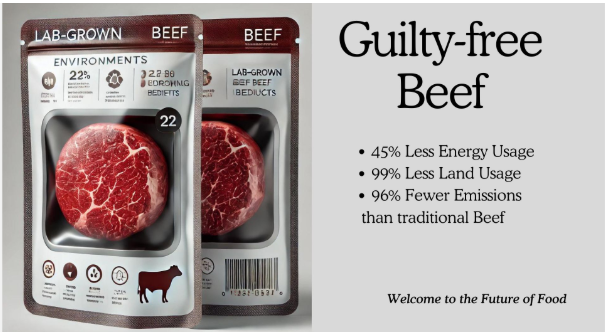
Results:
- Opinion change after exposure: Only 6.67% (Yes or Maybe)
- Top motivator: Health benefits (43.33%)
- Key insight: Communication efforts should emphasize health-related aspects, such as lower fat content and fewer chemicals compared to conventional meat
Third Communication Piece: Video – “Alternative Protein for Animal Welfare”
Results:
- Before the video: 32% were convinced (Yes or Maybe)
- After the video: 76% were convinced (Yes or Maybe)
- Primary concern: Health benefits (43%)
- Key insight: Sample trials increased willingness to try (30%), highlighting the importance of experiential marketing
Expert Interviews & Results
Expert interviews provided additional insights into industry perspectives:
- Anne-Katrin Pflästerer (CEO, AKP Communications GmbH)
- Key insight: Messaging is polarized between alternative protein proponents and traditional livestock industries. The challenge is shifting perceptions of “artificial” proteins.
- Herman Sloot (General Manager, Calysta)
- Key insight: Companies should highlight immediate advantages like health outcomes, nutrition, and taste, supported by scientific evidence in a single clear messaging.
- Food Representative (European Food Safety Authority – EFSA)
- Key insight: Regulatory challenges include safety standards, ingredient transparency, and production methods, country-based.
Communication Framework
The study concludes with a strategic communication framework for promoting alternative proteins:
1. Transparency
- 62% of consumers check ingredient lists (Insight 2021) and many look for the manufacturing companies online
- Transparent labeling and extensive information about production processes, safety, company structure and nutritional benefits to build trust
2. Sensory Appeal
- Taste, aroma, and texture are crucial – a gateway to repeated consumption and long-term dietary change
- Address “disgust” barriers through familiarity and positive exposure
3. Targeted Messaging
- Tailor messages based on consumer priorities (e.g., health-conscious vs. environmentally focused consumers)
- Consumers pay for clear benefits, not novelty
4. Educational Campaigns
- Use media, endorsements, and in-store promotions to mitigate neophobia
- Clear, transparent communication on health, environmental, and ethical benefits – knowledge and evidence-based information that counters the narrative of APs being overly processed or artificial.
Conclusion
This research contributes to the growing field of consumer behavior and sustainable food consumption by offering a communication framework for the food industry to navigate evolving market dynamics. Understanding and leveraging consumer perceptions can drive the adoption of alternative proteins across various applications (e.g., pet food, dairy, supplements), ultimately supporting global sustainability efforts.
Final Thoughts: Alternative proteins hold great promise for sustainability, but strategic communication is key to overcoming skepticism and driving widespread consumer acceptance. I urge the food industry to start focusing on consumer perceptions and how to be position their new products among consumers. Especially now that the novel food started to see their first attempts in the market, it is crucial to address communication plans properly and strategically.
* All references and percentages sources can be found in the document literature
 The Diary of a digital Journey