Tag: business

  • Green Hushing and avoiding communication about environmental initiatives and sustainability

    Green Hushing and avoiding communication about environmental initiatives and sustainability


    The Reputation Institute says 91% of consumers want to engage with brands with strong CSR. This need of transparency reflects a broader trend toward corporate accountability and sustainability, driven by heightened expectations from stakeholders, investors and consumers to regulators and civil society.

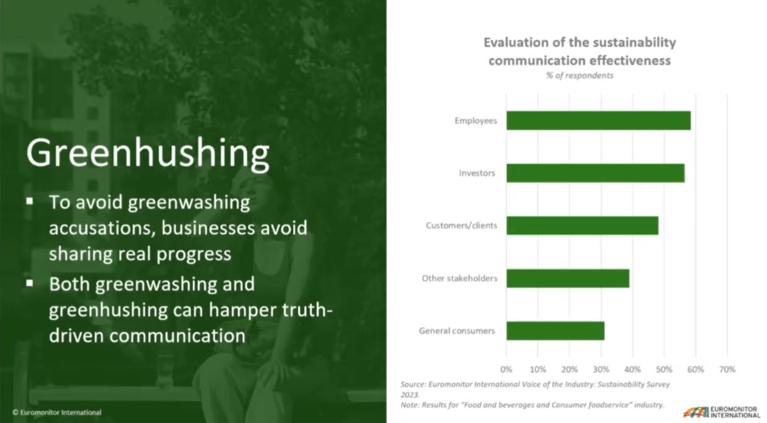
    Transparency, as manifested through comprehensive ESG disclosure, is seen as a mechanism for fostering trust, enhancing stakeholder engagement, and promoting responsible business practices. Yet, many companies are taking a step back and started practicing what is called “Green Hushing”.

    The term green hushing was coined in late 2022 by Zurich-based consultancy South Pole, after a study the same year surveyed 1,200 private companies in 12 countries and 15 sectors on their net-zero progress. It found that 72 percent of the companies surveyed had set emissions targets in line with global climate goals. However, the study also found that one in four companies do not plan to talk publicly about their climate-related goals.

    This can be explained for several reasons:

    1. Fear of Scrutiny: Companies may be concerned that their environmental claims could be scrutinized or criticized, especially if they are not fully meeting sustainability goals or if there are discrepancies in their practices.
    2. Avoiding Greenwashing Accusations: To steer clear of being accused of Green washing (making misleading claims about the environmental benefits of a product, service, or company), some organizations choose not to publicly share their sustainability efforts.
    3. Competitive Advantage: Some companies might view their sustainability strategies as a competitive advantage and choose to keep them confidential to prevent competitors from copying their practices.
    4. Uncertainty in Regulations: With evolving regulations and standards around environmental claims and sustainability reporting, companies might hesitate to communicate their efforts until there is more clarity.
    5. Incomplete Initiatives: Companies might prefer to remain silent about their environmental efforts until they have fully developed and implemented their initiatives to avoid premature disclosure and potential backlash if the efforts fall short.

    By engaging in green hushing, companies aim to mitigate risks associated with public and regulatory scrutiny while still working towards their sustainability goals internally.

    This is in my opinion very short-sighted from company’s perspective. In today’s dynamic business landscape, where consumers are more and more informed and therefore interested on how companies behave (especially in topics related to social responsibility), companies are expected to share more information.

    This is not something companies can escape nor avoid.

    Firstly for most large companies based in the EU or generating over EUR 150 million in EU the Corporate Sustainability Reporting Directive (CSRD) will be a mandatory open report from 2025.

    Furthermore According to a study from 2022, among consumers, increasing visibility and the disclosure of information has always positive effects in the strengthening of trust among consumers. No matter is at that certain point collected data are not as positive as you might wish for, alone the facts that they have been showing and made available is a sign of responsibility and accountability.

    Being trust is nowadays becoming more important than money.

    But how does it have to do with digitalization? Only through digital tools and platform the process of gathering data and communicating will be enabled. Some examples:

    Automation of Data Gathering: Digital tools can automate the collection of sustainability data, reducing human error and increasing efficiency. For instance, IoT devices can monitor energy usage, emissions, and resource consumption in real-time.

    Centralized Data Repositories: Digital platforms can centralize sustainability data, making it easier to manage, analyze, and report.

    Real-Time Reporting: Digitalization allows for real-time data collection and reporting, which can improve the accuracy and timeliness of sustainability reports.

    Standardization: Digital tools can help standardize data formats and reporting structures, aligning with CSRD requirements and making comparisons across companies more straightforward

    Interactive Platforms: Digital platforms can facilitate better communication with stakeholders by providing interactive and easily accessible sustainability reports.

    About 66% of consumers want to know about the brands they engage with, and nearly 60% want to hear about it on social media. Rather, respondents believe brands are more effective on social media when they announce donations to specific causes (39%) and encourage followers to take specific steps to support causes (37%), such as participating in events or making their own donations.

    Feedback Mechanisms: Digital tools can include mechanisms for stakeholder feedback, enhancing engagement and accountability.


    So my takeaways: Digitalization is not a “nice-to-have” project in organisations, rather the very starting point to be able to comply with CSRD as well as having sustainability data more accurate, accessible, and actionable. Ultimately by leveraging digital tools and technologies, companies can achieve greater transparency, efficiency, and stakeholder engagement hence create and enhance trust.

  • Navigating the Complexity of Digital Project Management: A Structured Approach

    Embarking on a new project, be it a website relaunch or the creation of a company newsletter, often prompts a desire to involve a diverse array of perspectives. So you organize large group sessions with various name: Kickoff meeting, “Brainstormings”, creative exchanges and all kind of encounters of this kind.

    Many people from different background and expertise, joining without having any preliminary discussion or briefing, having different experiences and knowledge as well as understanding of the purpose of the project. What is happen is that normally the loudest and more talkative person take the stage and becomes somehow the “authority” in the room, some people follow what he/she says and make small adjustment or amends, a few might have different points of view and try very carefully to point them out, being carefully not to be creating too much fuss, and the rest, let’s say the majority don’t actually say anything. Probably because they know they either won’t be heard or think what they would say don’t bring any value.
    At the end of such meetings, the result is obviously very biased and don’t take in consideration “unheard” needs or different perspective. Setting the project off with a shaky start

    After years of navigating this common scenario, it’s evident that these meetings often fall short of delivering positive results for various reasons:

    Absence of Key Decision-Makers

    The presence of decision-makers, especially executives like the CEO, is crucial in shaping the direction of a project. Without their input, discussions may lack the necessary strategic guidance, potentially leading to decisions that require reconsideration or adjustment.

    Exclusion of End Users

    Projects designed to benefit end users suffer when those users are not actively involved in the early stages. The absence of user feedback and engagement in the development process can result in solutions that miss the mark, failing to address the specific needs and preferences of the intended audience.

    Lack of Uniform Problem Understanding

    Assumptions about shared understanding can be perilous. Not everyone may grasp the intricacies of the challenges at hand, leading to misguided decisions or oversights in addressing critical issues. A comprehensive understanding of the problems is vital for crafting effective solutions.

    Diminished Concentration in Group Settings

    In-person meetings, despite their intentions, often lead to diminished concentration spans. This observation, though not formally studied, has practical implications. Participants may grow fatigued, hindering the effectiveness of discussions and potentially compromising the quality of outcomes.


    In my recent experience on working with several different teams across the globe on the same digital projects (let it be website relaunch or company newsletter) I realize that the most difficult thing is outside the typical “IT” world, to apply the same way of working with peoples not used to it, as basically in all other fields and professions, you are not though a method to work together.

    In marketing or finance, or any sociology kind of studying field, there is very high probability that you never heard of the “Agile methodologies, or the Scrum framework”: basically learning how to to truly understand others need and being able to reflect them into the final outcome of the project.

    I am not saying everyone should work like a typical “IT person” (although with increased use of technology in all fields of our life it might not be a bad idea) but I am say at least we should switch our mind-set approach to a more structured way of working together when it comes to digital projects.

    Here are key insights and recommendations:

    1. Establish a Robust Project Management Framework

    To foster efficient collaboration, create a project management framework tailored to your organization’s needs. This could be a dedicated tool, a shared folder, or even a WhatsApp group. The goal is to provide a centralized platform for seamless communication, file exchange, information sharing, and task assignment.
    It could be anything that works in your organisations, but as organiser you should start putting the basis and establish a platform where you: – Communicate within your team – Exchange Files / Documents – Share information and give tasks – Update Timeline

    Avoid relying solely on emails, as they can lead to information loss and hinder transparency. Reserve emails for quick requests, reminders, and project summaries.

    2. Identify and Engage Internal Stakeholders Early

    One of the biggest risks in project management is overlooking key stakeholders. Take the time at the outset to identify and engage all internal stakeholders who may be impacted by the project. Beyond the obvious roles, consider regional or department-specific needs. This foresight ensures a comprehensive understanding of the project’s scope and the involvement of all relevant parties.

    You might realize only afterwards that you didn’t spend enough time in the first stages of the process to really think about who is going to be impacted by this process and who/which departments are going to play a role. You start thinking that for a website relaunch you need products managers and HR colleagues but afterwords you realize you need to understand regional / local needs in particular field (like Recruiting within a particular country) or your finance team might need to have a page for shareholders or your colleagues in manufacturing might want to put more emphasis on the operational excellence of your company. And if you didn’t involve them previously enough in the development of the project, it might be too late and / or very costly.

    3. Compile a Comprehensive Requirements List

    Before diving into the project, create a list of requirements that align with the project’s goals. For instance, in a website relaunch, requirements could include multilingual support, mobile responsiveness, and a focus on lead generation. Engage in individual discussions with each stakeholder to collect their input, forming a collective “wish list.”

    In this way you first reach a deep understand of everyone’s need and truly hear what everyone has to say. Second you obtain a higher Involvement from the start if you have a single conversation with the responsible person. A digital project is ALWAYS a group project, so you need to have all stakeholders on-board before starting. If you think about the website, the person responsible for content will feel engaged if it was taken in considerations from the beginning and he/she will be ready and willing to deliver their parts timely and in a higher constructive way.

    4. Foster a Culture of Continuous Improvement

    In addition to the foundational steps, instill a culture of continuous improvement within your project team. Encourage open communication, feedback loops, and adaptability. Embrace agile methodologies, even outside the traditional IT realm, to respond effectively to changing circumstances and evolving requirements. This iterative mindset enhances collaboration and enables the project team to navigate challenges seamlessly.

    In conclusion, a structured approach to digital project management, encompassing effective communication, stakeholder engagement, comprehensive requirements gathering, and a commitment to continuous improvement, sets the stage for success. By incorporating these principles, you can ensure that your digital projects not only meet the needs of the team but also deliver value to the end users.

  • Soft skills needed in the Digital Journey

    The first thing that comes into our heads around the notion of digitalisation and in general the digital world is not for “listening” or “convincing techniques”. Normally we think about which programming language we should learn, what tools we should master, what platforms we should use, not to mention the whole ai “buzz” now everywhere (no ai=useless nowadays) . Yet the importance of more “personal” skills tends to be overshadowed.

    Not very often I heard about needing other more “personal” skills in relation to the success of a digital journey implementation. But ultimately, people are the primary stakeholders in any digital journey. The success of the implementation revolves around on whether they embrace and adopt the tools and processes developed. Ignoring this crucial aspect can lead to failure, as evidenced by the closure of digital startups, with people cited as the primary reason for their demise.

    Just today I read about the fail of a “digital” start-up where the CEO mentioned “people” as the first reason for its failure. He also mentioned that before having a finished product, he should have started with talking with the people first and understand their real needs. And this is exactly what I also learned in my professional experience. It doesn’t bring anything to have a perfect and ultra performing tool or platform if this is not needed or worse hated from their users.

    In my professional experience, I’ve learned that certain “personal” skills are paramount when transforming old processes into digital ones or creating new ones. Here are the skills that, in my view, are essential:

    Listening, listening and again listening


    Absolutely, I am 100% sure about listening in the first place of this list. Before diving into any initiative, it’s crucial to engage with colleagues, understand their workflows, and inquire about their current practices. For instance, again from my own experience, when we had to transition from paper forms to digital devices for collecting contact information at events (like trade-shows), instead of starting with what tool we can use, which device are compatible,… the initial question should have been: “How do we traditionally welcome customers during a physical event?”

    Asking this question helps uncover essential details such as whether each salesperson needs an individual device, if a touch-screen for attendees is more suitable, or if having a dedicated person to record information centrally is the better option. Just knowing how the Team usually interact with customers during events lead to understand if a direct collecting in our smartphone even could be a possibility, since they might be too busy talking to them or maybe they might prefer a quick scanning at visit cards and later on include eventual further information.

    These insights are only accessed through open discussions and the exchange of information. By actively listening to the team’s input, we can accurately identify the specific requirements that need to be addressed. This collaborative and communicative approach ensures that any digital implementation aligns seamlessly with existing practices and meets the actual needs of the team.

    Be Patient and Repetitive


    Assuming that a single training session or one email is sufficient for a successful digital implementation process is either living in another universe or indicative of no experience in such projects. Achieving comprehensive learning takes repetition – approximately 10 times to solidify one full understanding. It’s not a reflection of lacking skills or laziness; rather, it’s a reality that individuals juggle various tasks and challenges in their professional lives. They might not immediately apply what they’ve learned due to the demands of their roles.

    Expecting users to recall everything from a training or webinar, especially when they try the tool much later, sets the stage for frustration and disrupts the learning experience. It falls on us to be the constant support, reiterating, explaining, and training repeatedly. A positive approach, delivered with a smile and gentle guidance, is key. What may seem obvious to those immersed in the digital realm every day can be challenging for occasional users to remember. Patience and repetition become the pillars of ensuring a smooth and effective learning experience.

    Flexibility is your best friend

    Sometimes what I had in mind was very far from reality. For example I once created a perfect funnel that started from and adv in social media, followed by a series of email and ending with a 1:1 meeting with an expert.

    However, reality struck hard – the social media ads weren’t reaching the right audience, the landing page went largely unnoticed, and the expected clicks simply weren’t materializing. The entire funnel came to an unexpected halt. Internally, the follow-up process faced hurdles due to a lack of information among the experts.

    In hindsight, a major misstep was expecting our target audience to react precisely as we envisioned, not accounting for their actual behavior. I fully own up to this oversight; as digital experts, it’s our responsibility to ensure actions align with real habits rather than being overly theoretical. The key lesson here is to stay prepared for quick and frequent adaptations. Flexibility is crucial in the digital realm, where changes in strategy may be necessary to align with the audience’s actual responses rather than our anticipated reactions.

    Positive and Enthusiast no matter what


    We’re bound to face numerous challenges along the way, with significant pushback and criticism from various stakeholders. This is not surprising, considering human nature tends to resist change and new things. The fear stems from a potential loss of control over tasks and a reevaluation of one’s role in the process. People might feel redundant, especially if their responsibilities shift due to the implementation of new tools. Skepticism is also expected, as past experiences with various digital tools, some successful and others not, might breed doubt.

    In navigating these pitfalls, our role as “digital drivers” becomes pivotal. We must show and keep unwavering confidence, positivity and assurance that the changes we’re proposing are not only right but necessary. Reassuring our team that the new ways of working are well-founded and beneficial becomes a crucial aspect of steering through the uncertainties.

    Master convincing Technics

    The last critical skill for today, which I believe is indispensable, revolves around what I previously referred to as “convincing techniques” or the principles of influence. These serve as highly effective strategies for persuading and gaining the cooperation of others. This becomes particularly crucial when introducing new tools or altering processes that may initially demand more effort, risking resistance if not convincingly presented. Even if such changes are mandated from the top, success hinges on ensuring that the users are not just informed but actively brought on board. Mere decisions won’t suffice; it requires a hands-on approach, ensuring everyone feels heard and valued.

    Several influencing techniques prove valuable in this endeavor:

    1. Appeal to Emotions:

    • Engaging individuals passionate about technology, positioning the change as a revolutionary leap forward. It’s vital to be cautious, as excitement may wane if the novelty factor diminishes over time.

    2. Logical Reasoning (“Added Value”):

    • Clearly articulating the benefits the new process or features bring—whether increased efficiency, boosted sales, or other improvements. It’s crucial to consistently highlight the ultimate goals and the positive outcomes.

    3. Social Proof and Fear of Missing Out:

    • Staying informed about industry trends, learning from others, and sharing those insights within the organization. Creating a sense of urgency by looking beyond our immediate context and observing competitors. A robust network is essential for obtaining such information, as it often relies on word of mouth or connections.

    In essence, successful implementation goes beyond decisions; it requires creating a narrative that resonates emotionally, demonstrating the tangible value through logic, and staying informed through a strong network. This approach ensures not only acceptance but active participation in the envisioned change.

    Disclaimer: Images are generated through ai by the tool Canva